REPORT

Invasive Plant Details

Back to Full List

Poison Hemlock

Latin Name: Conium maculatum

Priority Ranking: Regional EDRR

Identification

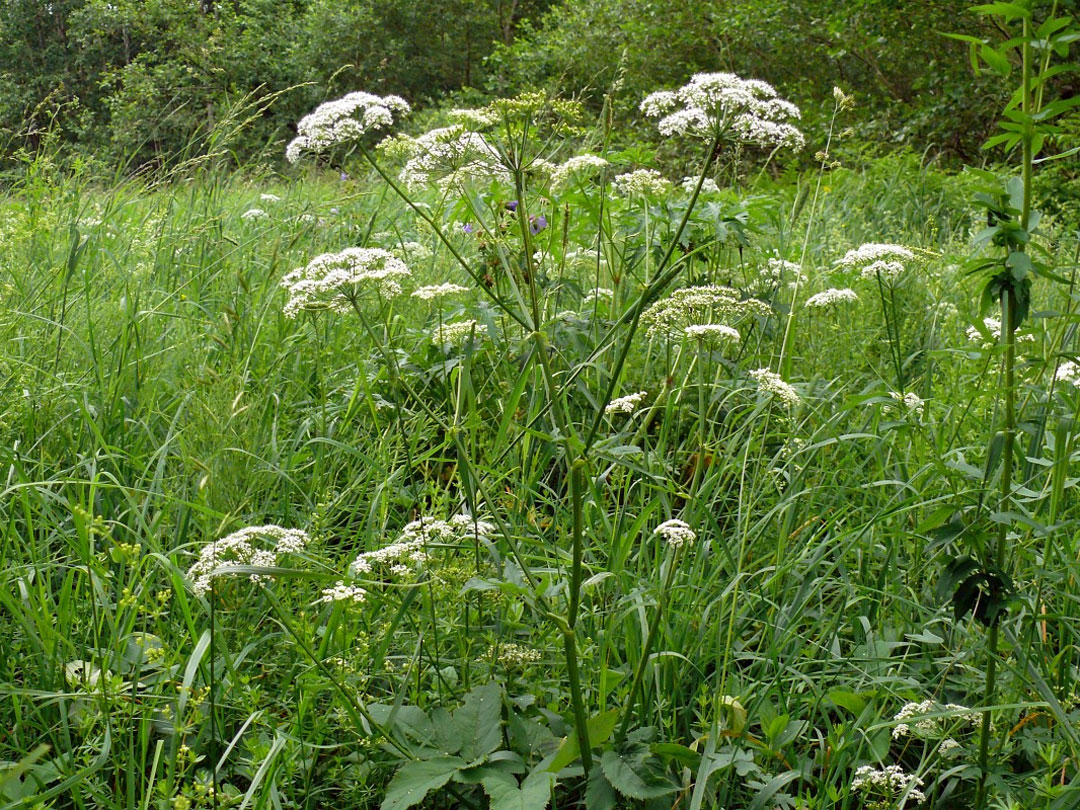
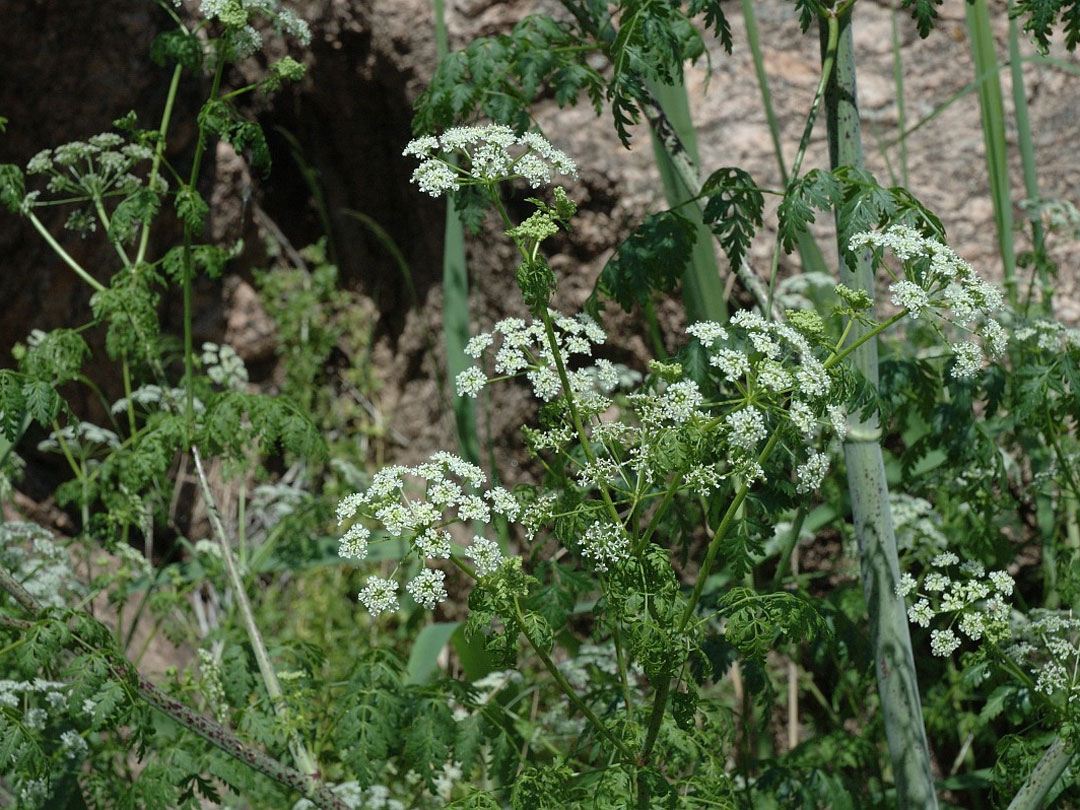
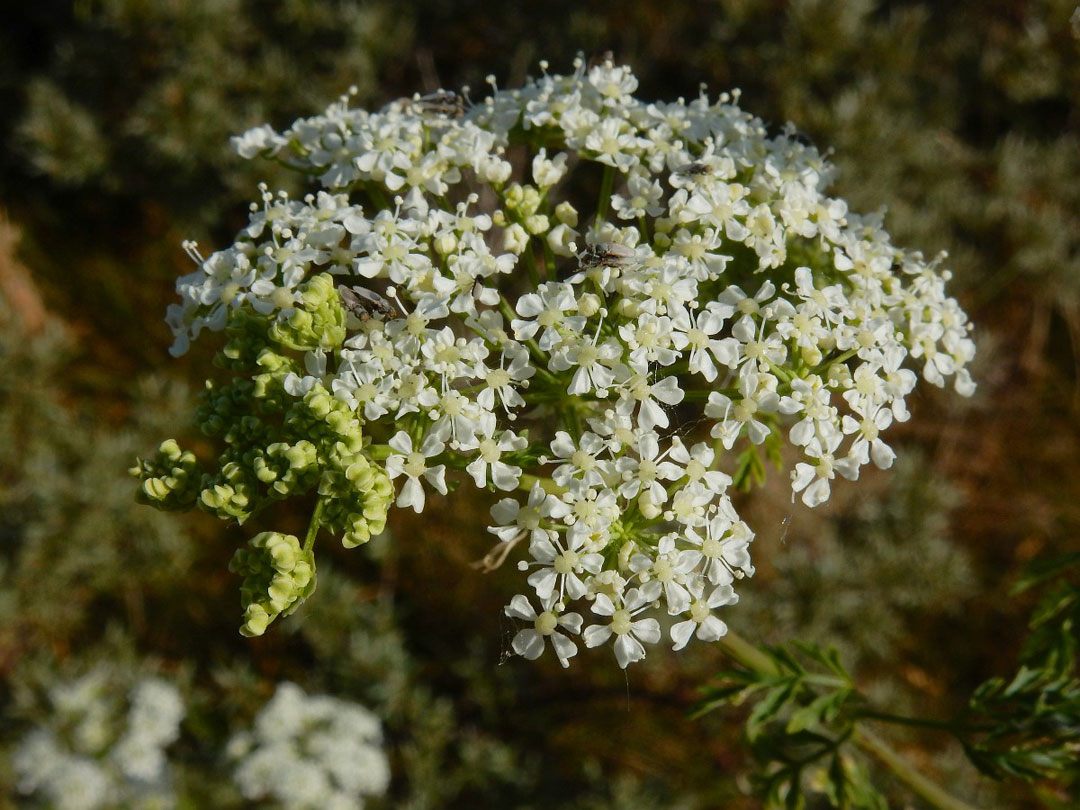
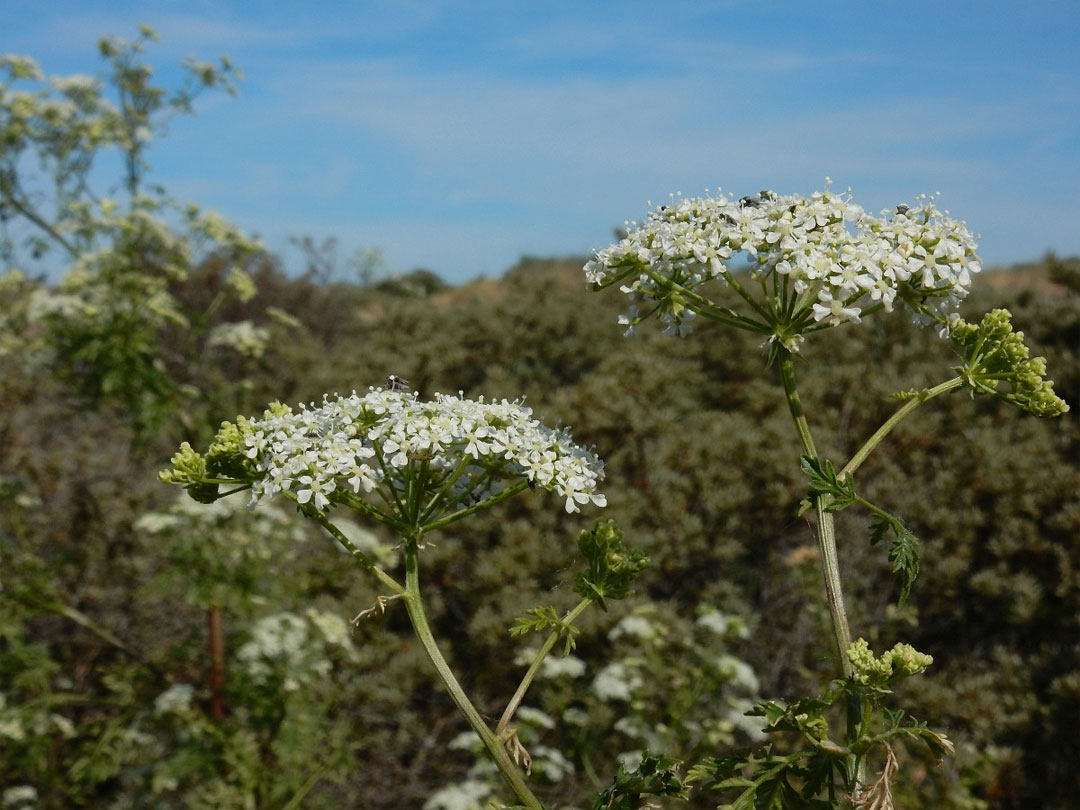
Flower: Small, white, umbrella-shaped flower clusters (umbels) that bloom from late spring to summer.

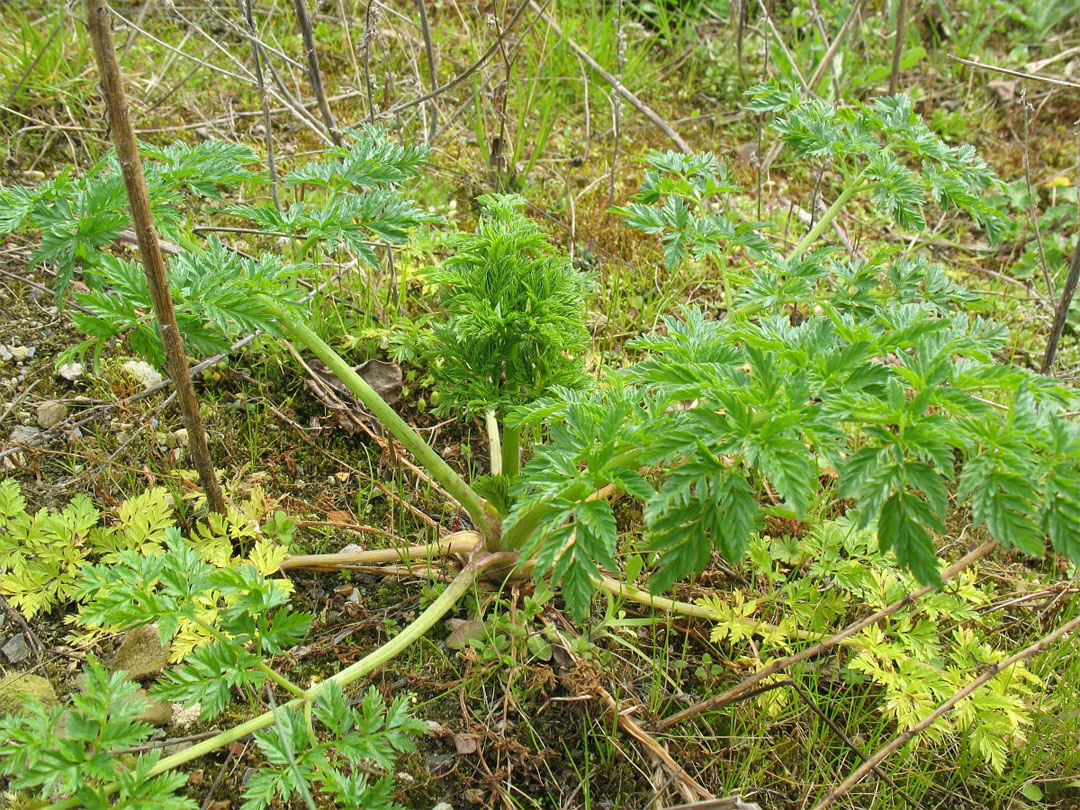
Leaves: Finely divided, fern-like, and dark green.

Stems: Erect, hollow, and smooth with distinctive purple blotches, growing up to 3 meters tall.

Growing Environment: Prefers moist, well-drained soils in meadows, ditches, and disturbed areas.

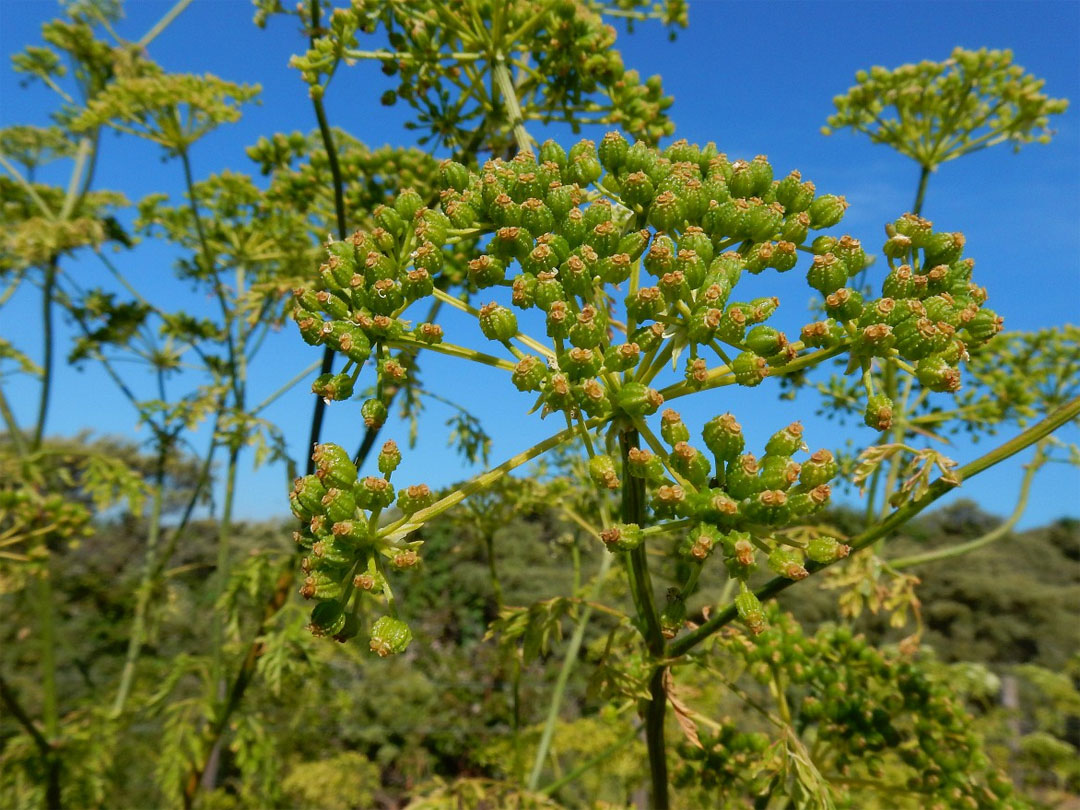
Growth Habit: A biennial herb that grows rapidly to form tall, bushy plants. It spreads by seeds and forms dense colonies in moist habitats. In situ, poison hemlock appears as tall, bushy plants with fern-like foliage and small white flowers, often in ditches or along streambanks.

Priority Ranking: Regional EDRR

Impacts on Environment

Impacts: Highly invasive in moist areas and disturbed habitats, where it forms dense stands.

Toxicity: Highly toxic if ingested; can cause respiratory failure and death in humans and animals.

NOTE: May be confused with our native Water hemlock, which is also extremely toxic and may cause respiratory failure and death to humans and animals.