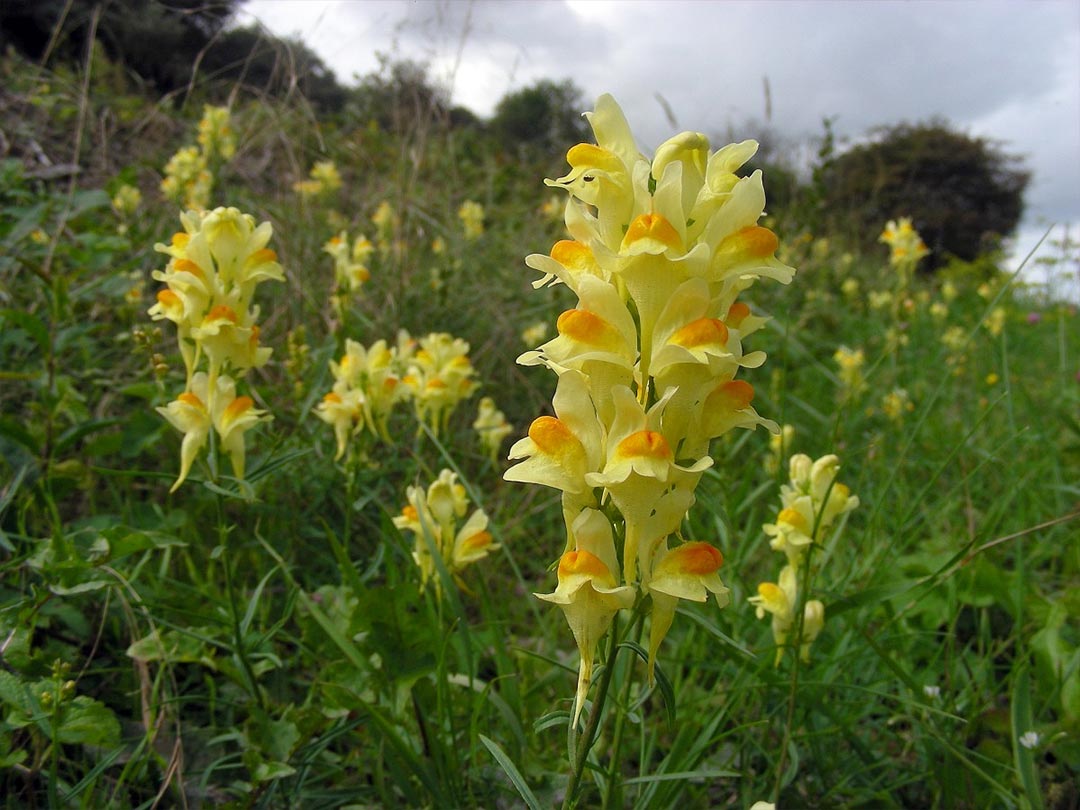
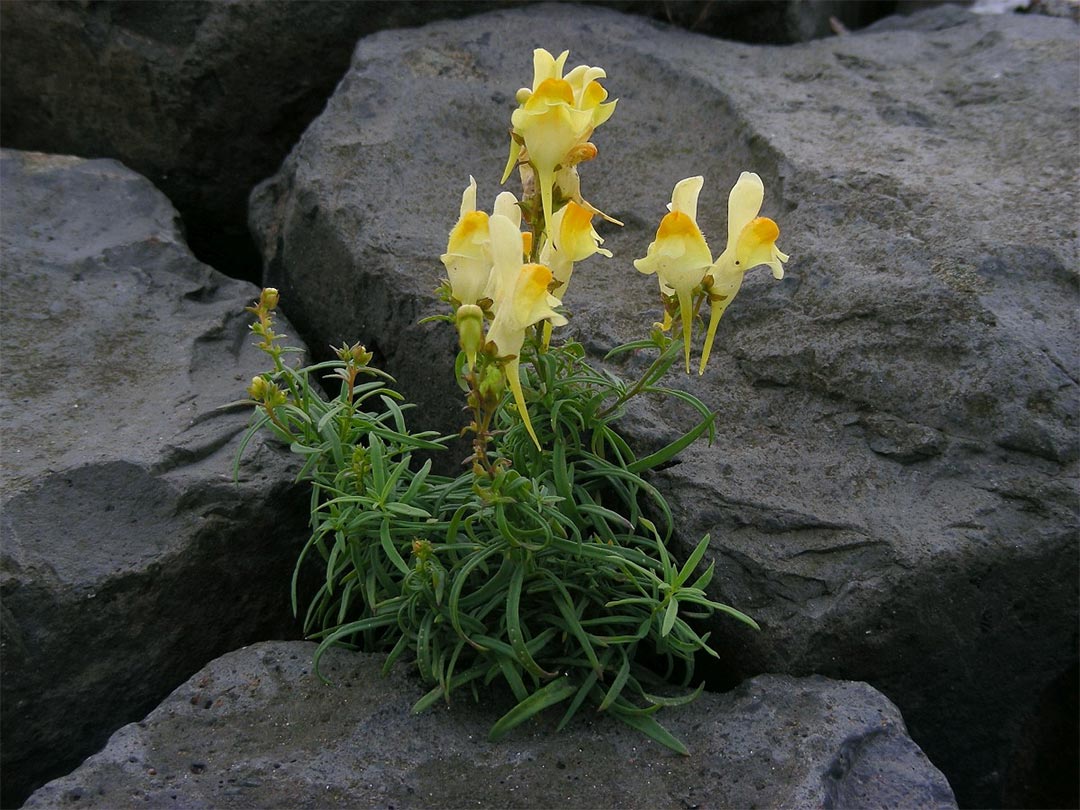
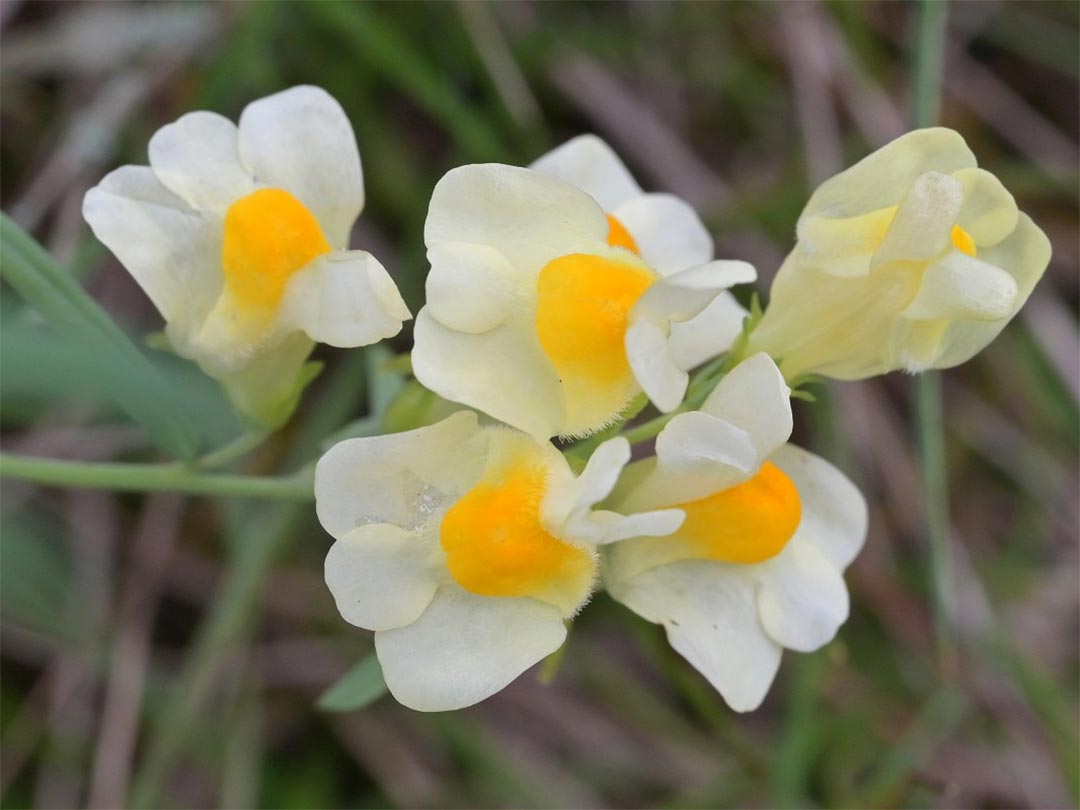
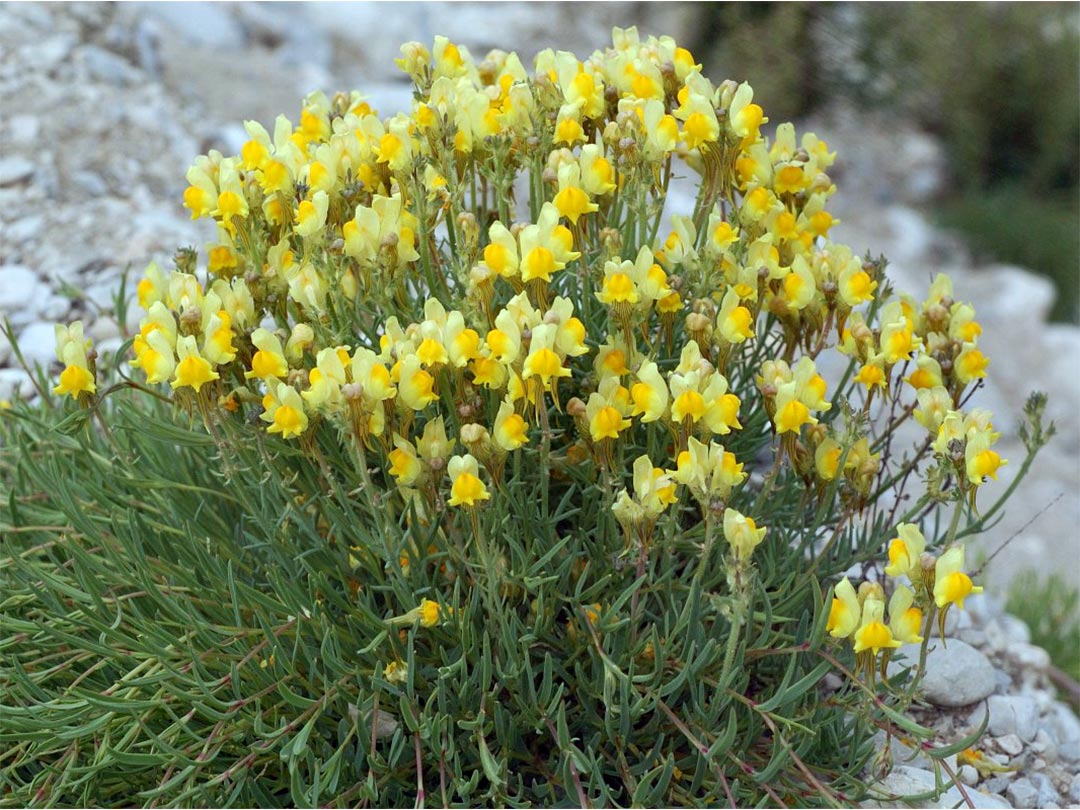
Flower: Bright yellow, snapdragon-like flowers with an orange throat. The flowers are two-lipped and have a long spur at the base, resembling a toad’s mouth, hence the name. They bloom from midsummer to early fall and are often clustered in dense, showy spikes at the tops of the stems.
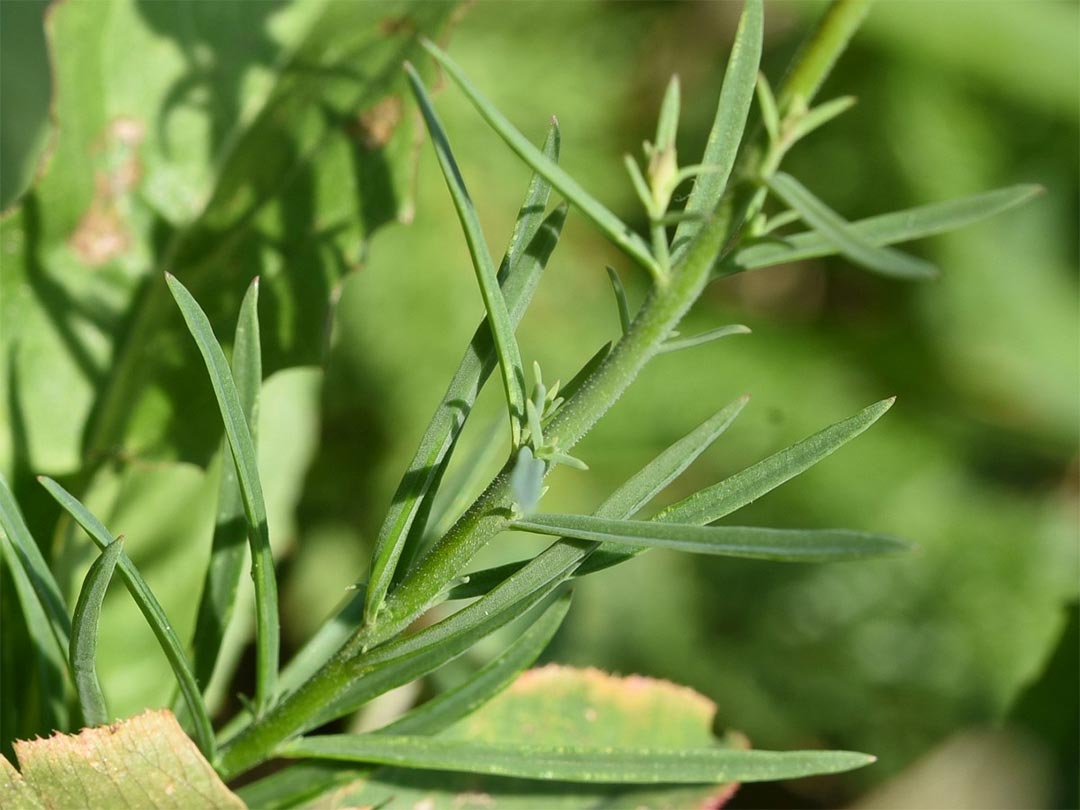
Leaves: Narrow, lance-shaped, and pale green, with a smooth texture. The leaves are arranged alternately or spirally along the stem and can be up to 6 cm long.
Stems: Erect, slender, and smooth, growing up to 1 meter tall. Stems are often branched at the top, bearing clusters of flowers.
Growing Environment: Prefers dry, well-drained soils, and thrives in fields, meadows, roadsides, disturbed areas, and along fences. It is tolerant of a wide range of soil types, from sandy to clay-rich soils.
Growth Habit: Yellow toadflax is a perennial herb that spreads aggressively through both seeds and creeping rhizomes. It can form dense colonies that outcompete other vegetation. The plant typically starts as a basal rosette and sends up multiple flowering stems as it matures. In situ, yellow toadflax often forms large, bright yellow patches that dominate open fields, roadsides, and disturbed habitats. The plant is very resilient and can regrow from root fragments, making it difficult to control.
Impacts: Highly invasive in disturbed areas, pastures, and rangelands. It spreads quickly through underground rhizomes and abundant seed production, forming dense colonies that displace native vegetation and reduce forage quality for livestock.
Toxicity: Mildly toxic to livestock if consumed in large quantities, though it is generally unpalatable.
Photo Credits: Free Nature Images - Tom Heijnen, Willem van Kruijsbergen, Ed Stikvoort