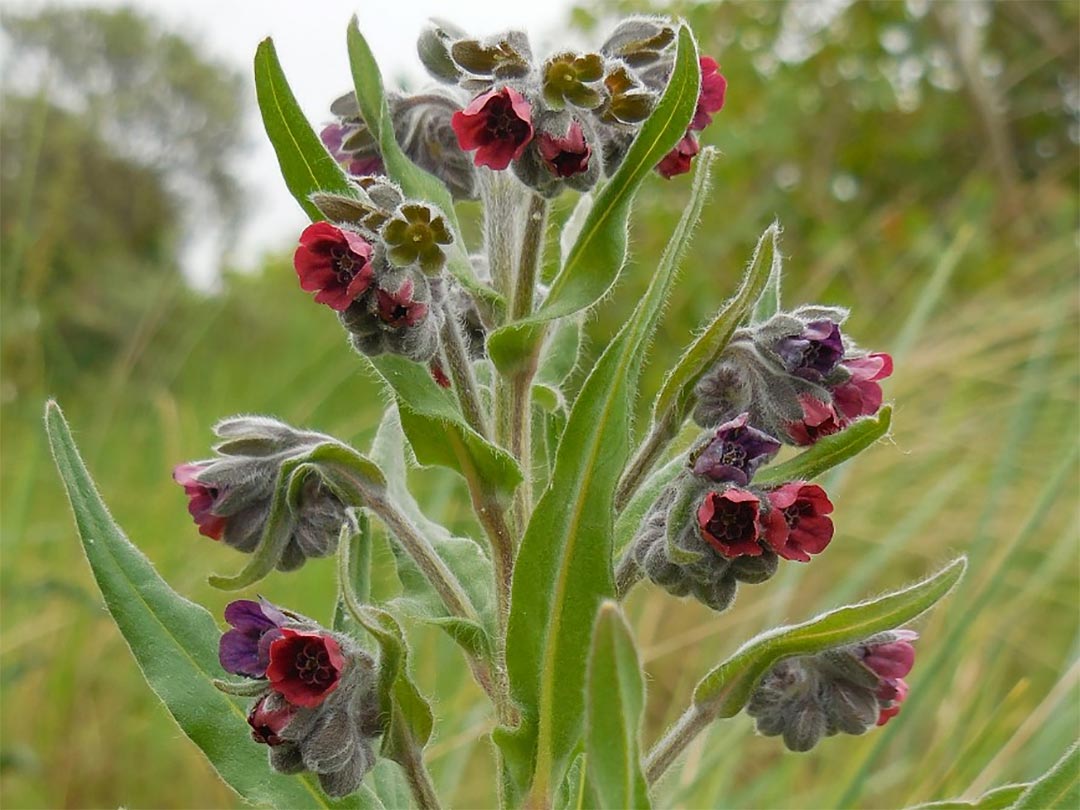
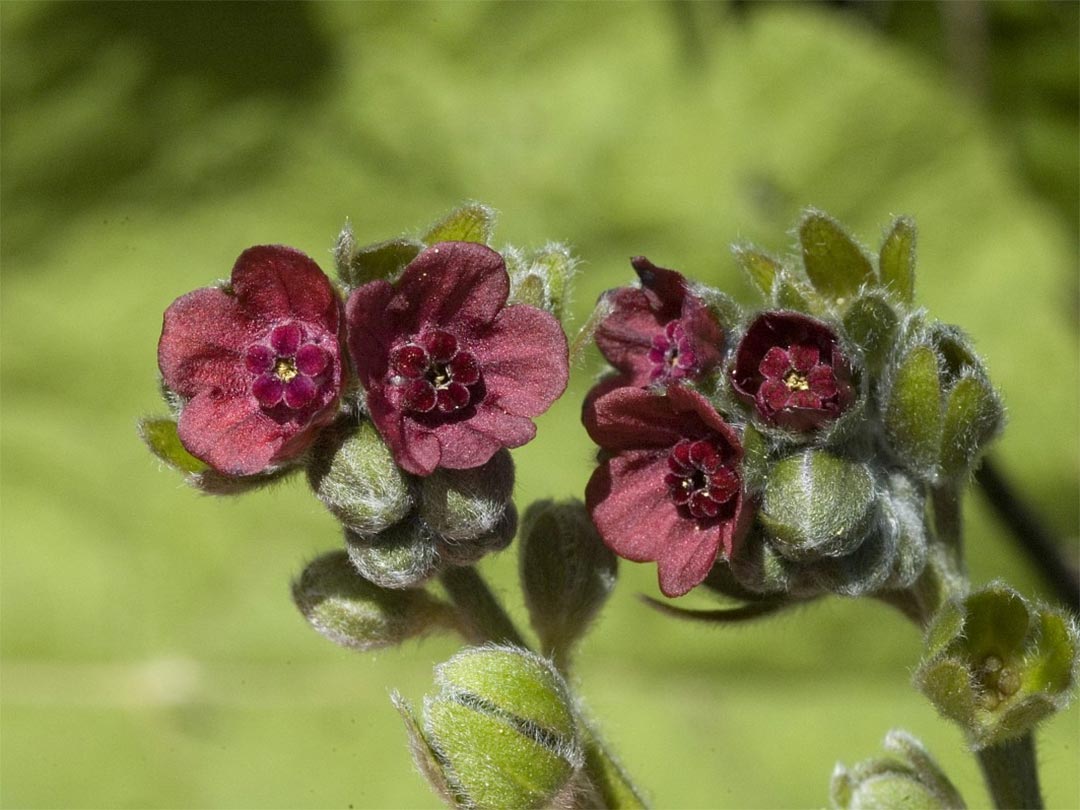
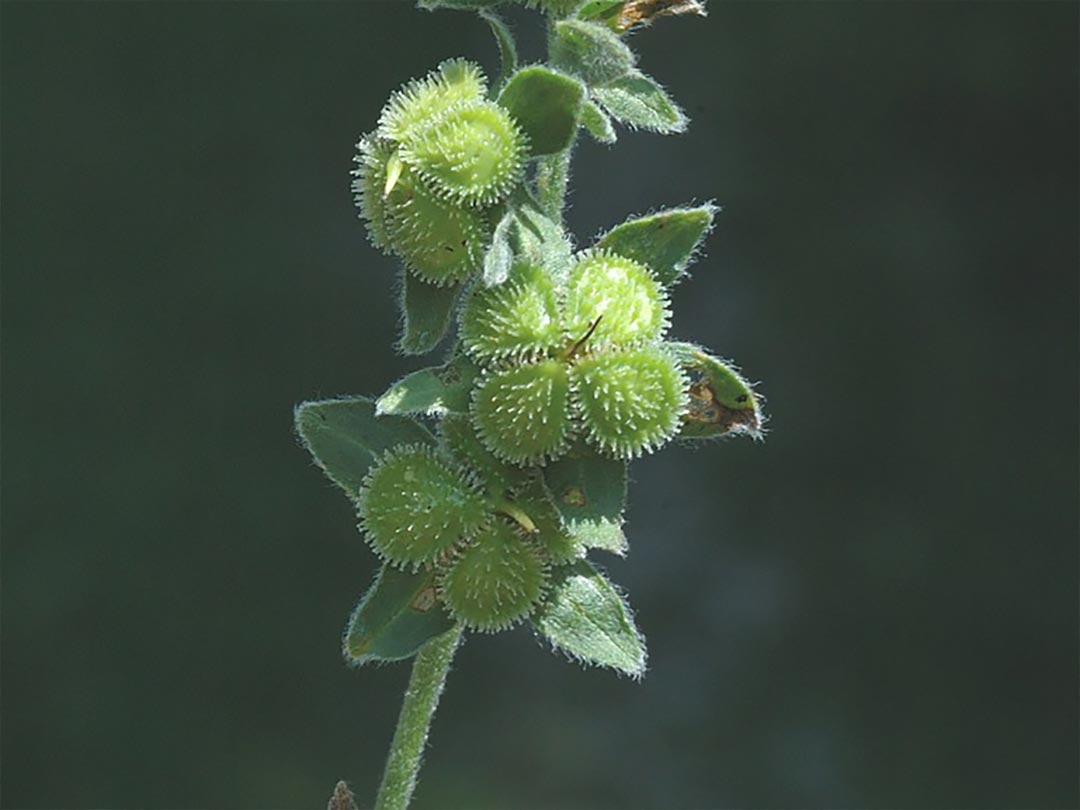
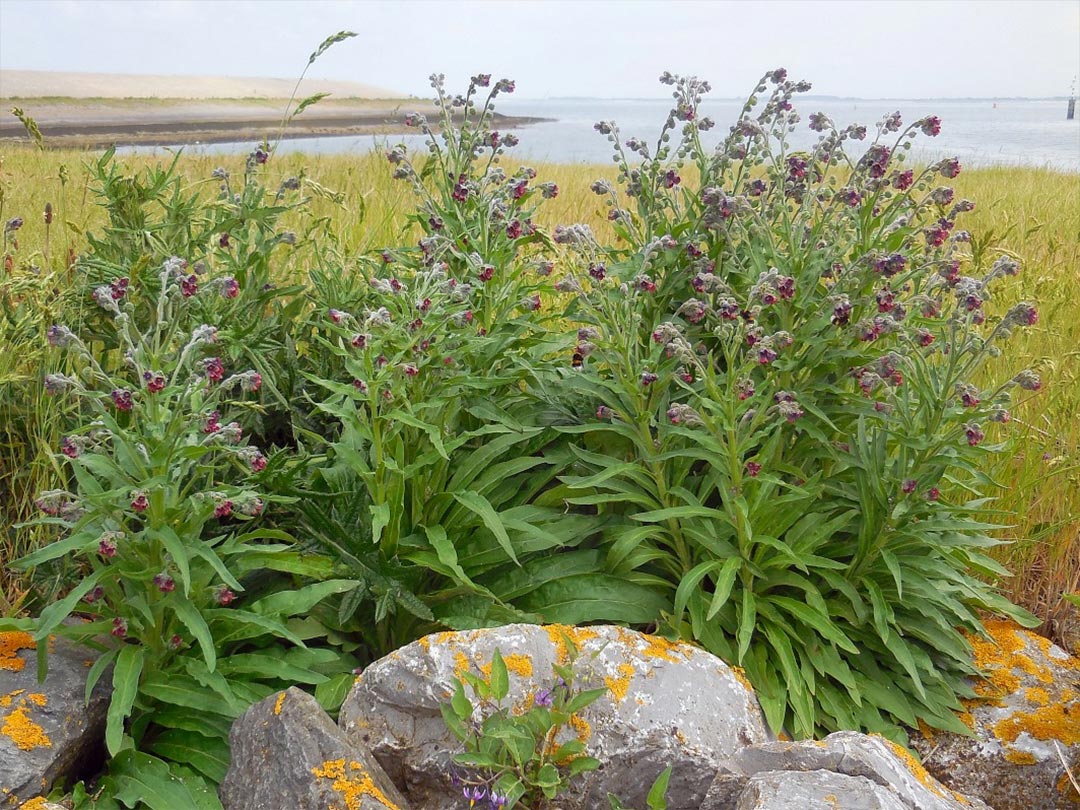
Flower: Small, reddish-purple, five-petaled flowers that hang in small clusters and bloom from late spring to early summer. Each flower produces four rounded-triangular seeds covered with hooked prickles.
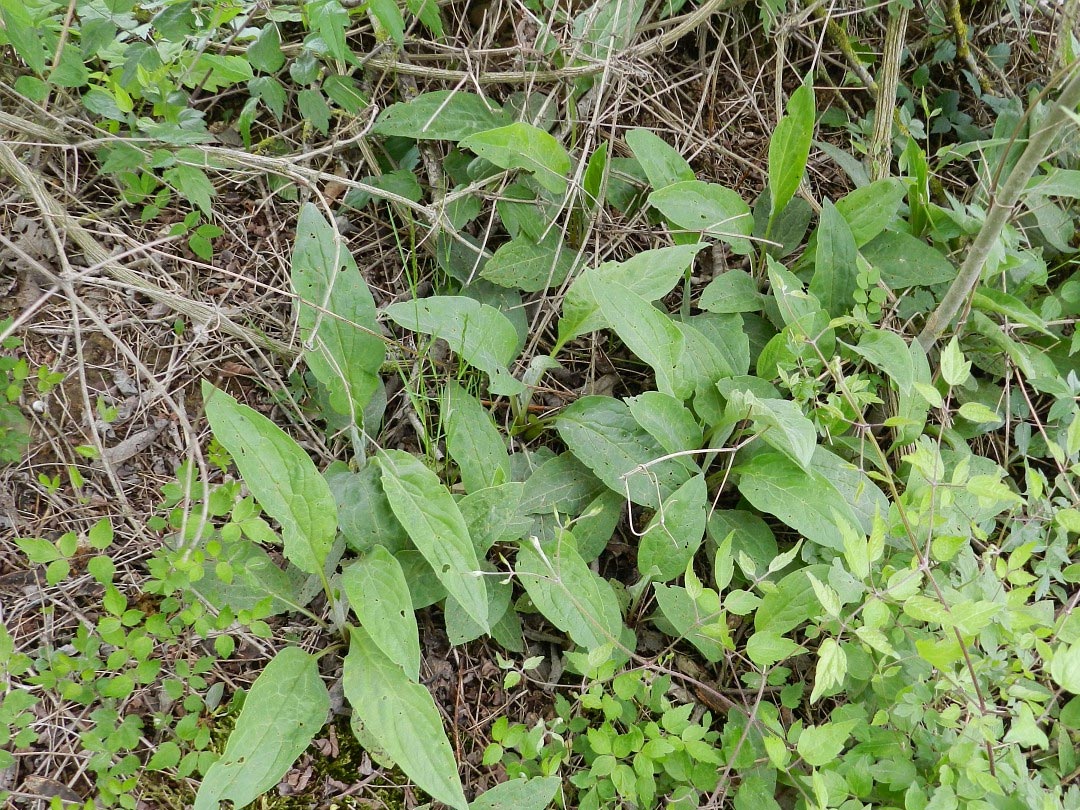
Leaves: Large, hairy, lance-shaped leaves that resemble a dog’s tongue, hence the name.
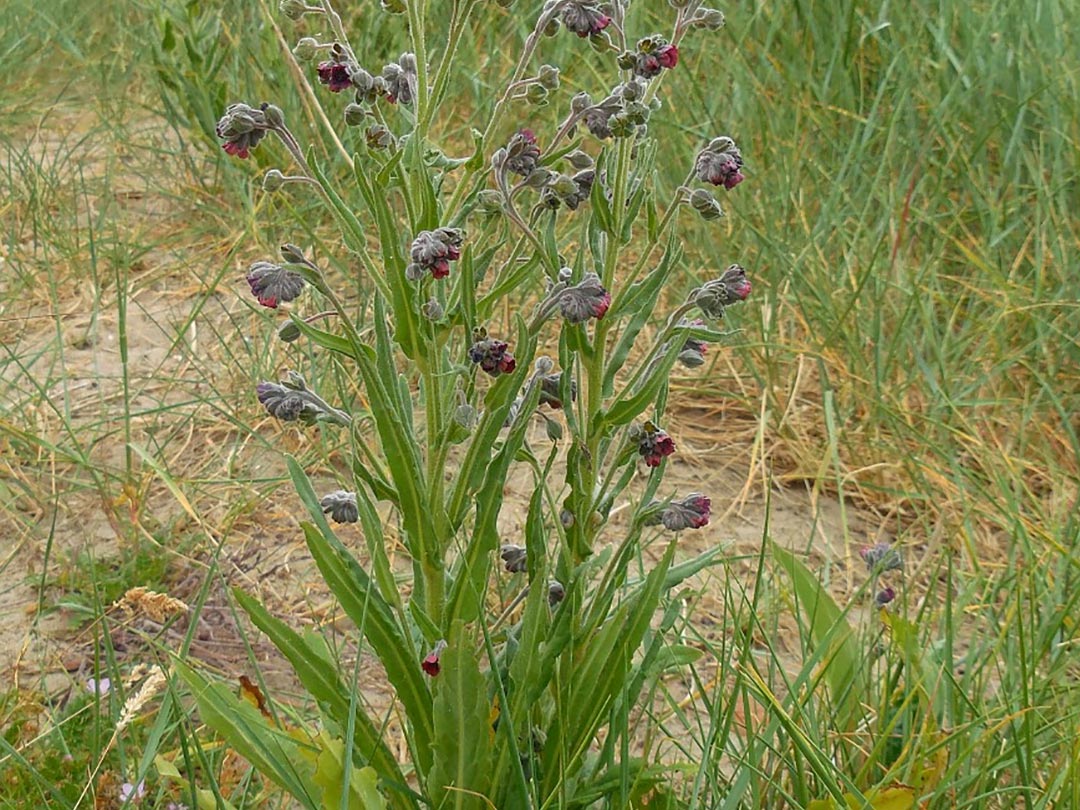
Stems: Erect, hairy, and unbranched, growing up to 1 meter tall.
Growing Environment: Prefers drier, well-drained sites and can grow under both deciduous and coniferous forest canopy. It is often found in woodlands, pastures, fields, rangelands, roadsides, ditches and urban waste sites.
Growth Habit: A biennial herb that forms a basal rosette in its first year and a tall flowering stalk in its second year. It spreads via bur-like seeds that cling to animals and clothing, allowing it to disperse widely. In situ, hound’s-tongue often forms dense clumps of hairy foliage in disturbed areas. (Also known as Houndstooth or Dog’s tongue).