Invasive Plant Details
Back to Full ListDalmation Toadflax
Latin Name: Linaria dalmatica
Identification
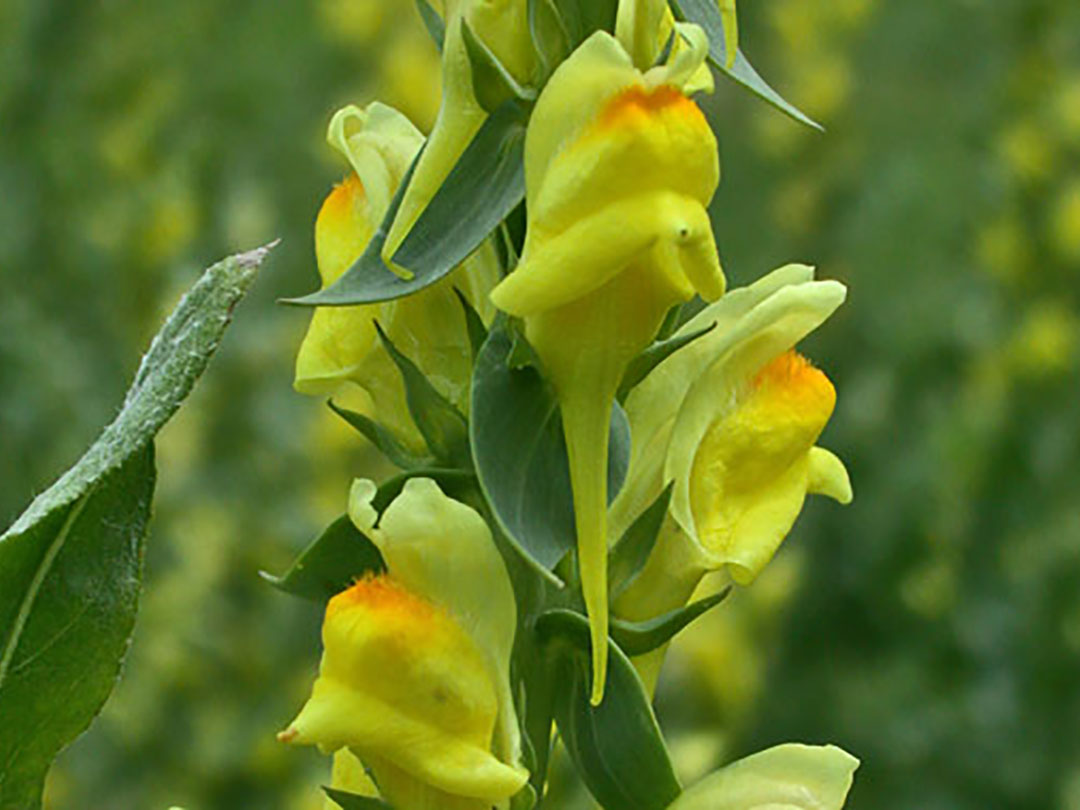
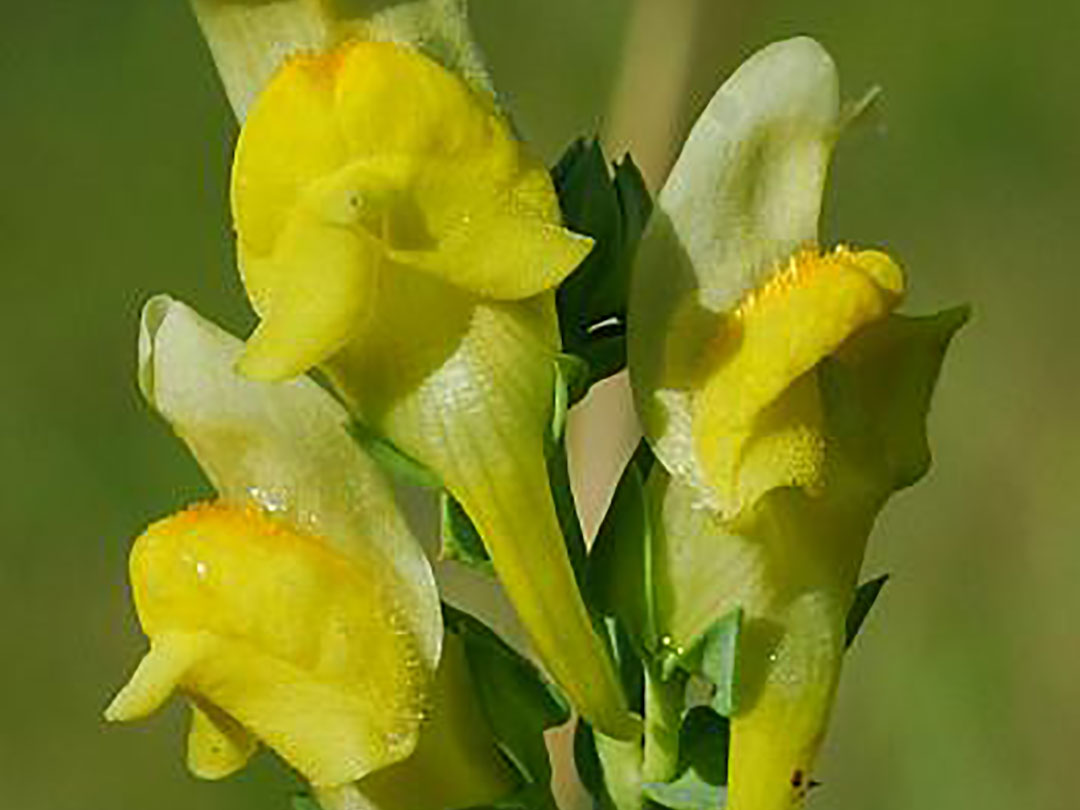
Flower: Large, bright yellow, snapdragon-like flowers with an orange throat, similar in shape to those of yellow toadflax. The flowers have two lips, with a characteristic long spur at the base. They bloom in dense clusters at the tops of the stems from midsummer through early fall.
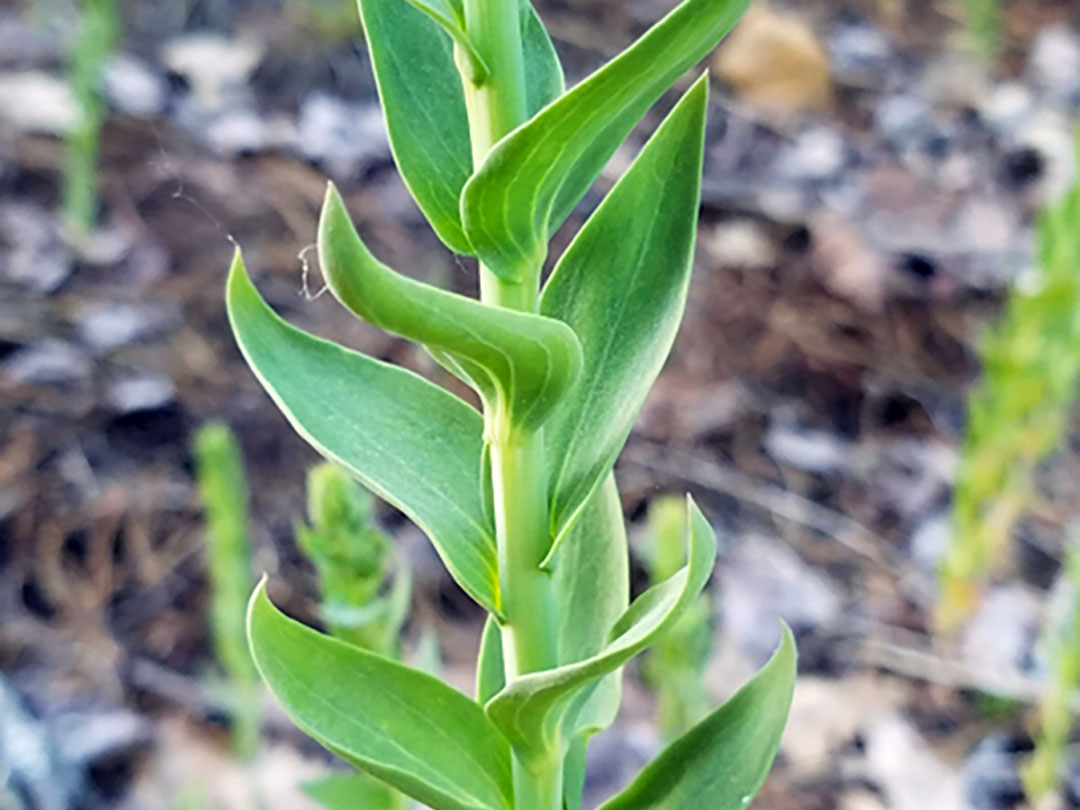
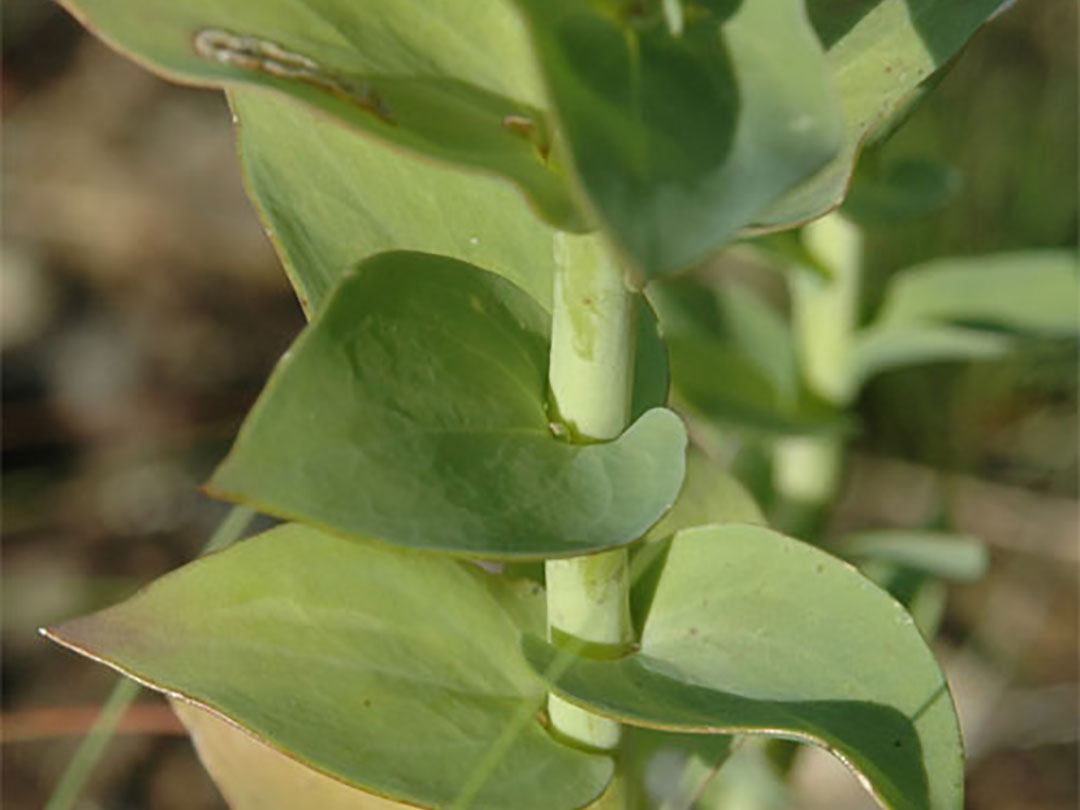
Leaves: Bluish-green, heart-shaped, and clasping the stem. The leaves are waxy and smooth, typically larger and broader than those of yellow toadflax, and arranged alternately along the stem.
Stems: Erect, stout, and smooth, growing up to 1.5 meters tall. Stems are often unbranched and support tall flower spikes.
Growing Environment: Prefers dry, well-drained soils, including sandy or rocky areas. Common in rangelands, pastures, roadsides, and disturbed areas. It tolerates drought well and can thrive in poor soils.
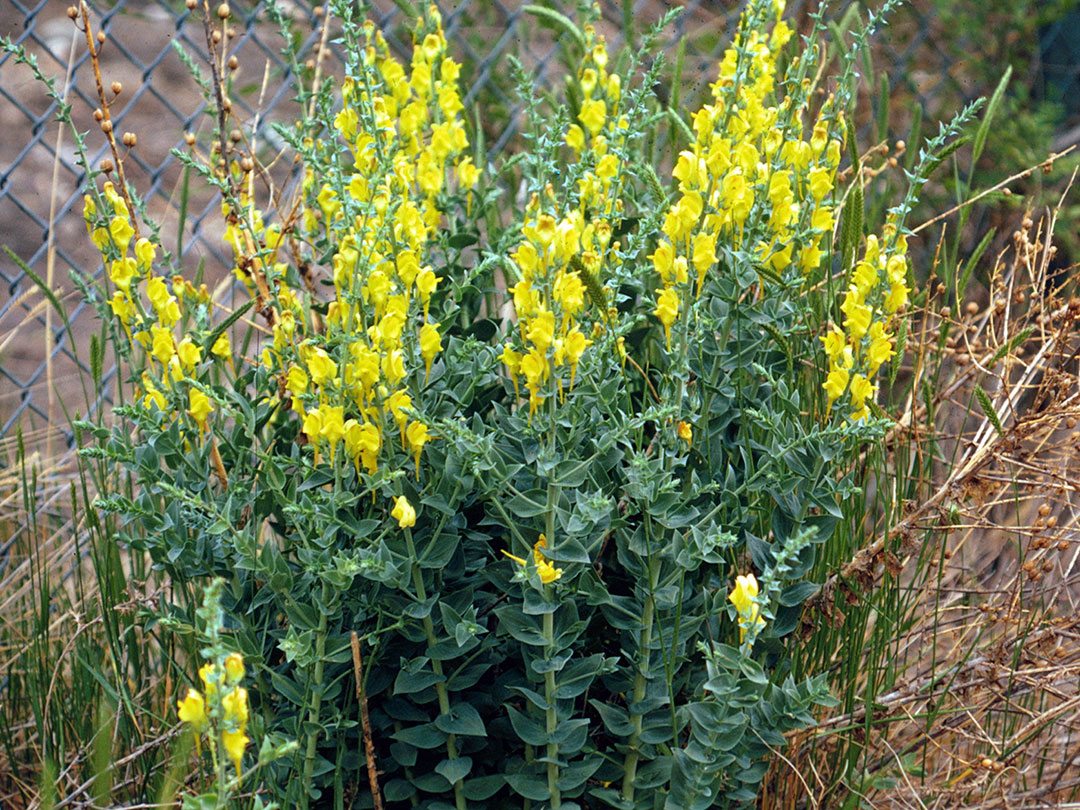
Growth Habit: Dalmatian toadflax is a perennial herb that spreads aggressively through both seeds and an extensive network of creeping rhizomes. It forms dense colonies that out compete other plants, particularly in disturbed environments. In situ, Dalmatian toadflax forms tall, bushy stands of bright yellow flowers and bluish-green foliage, often covering large patches of range lands, pastures, and roadside areas.

Impacts on Environment
Impacts: Highly invasive, particularly in range lands, disturbed areas, and roadsides. Dalmatian toadflax spreads rapidly through rhizomes and prolific seed production, forming dense monocultures that out-compete native species and reduce forage quality for livestock. Its deep root system makes it difficult to eradicate.